
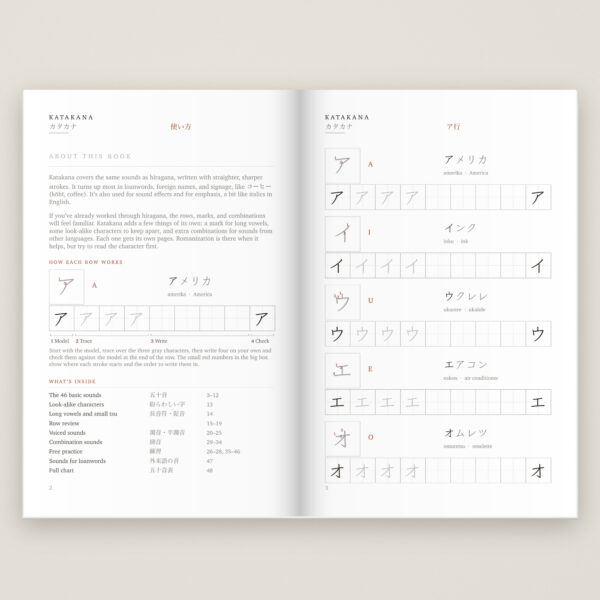


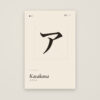
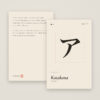
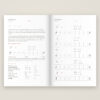
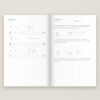
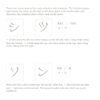
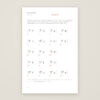
Each character gets a row: a large model with the stroke order marked in red, three gray copies to trace, four boxes to write on your own, and the model again at the end to check against. The example words are loanwords, like アメリカ (amerika, America) and エアコン (eakon, air conditioner), since that’s where you’ll see katakana most.
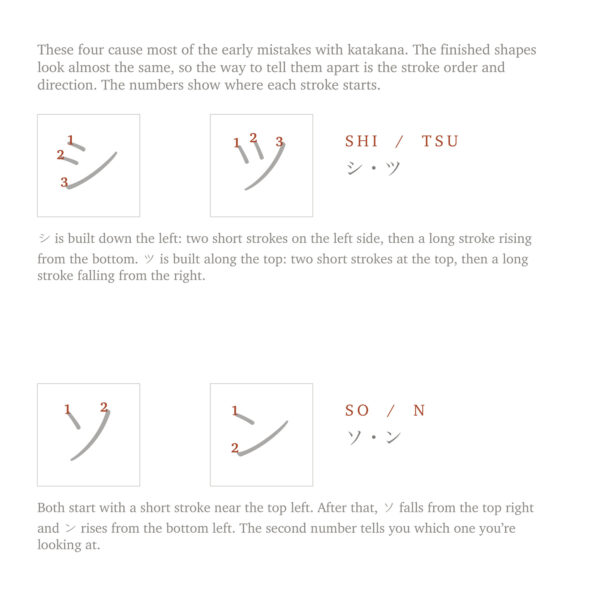
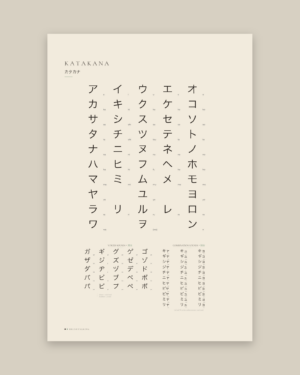
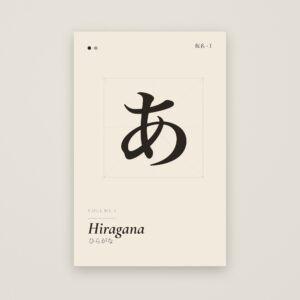
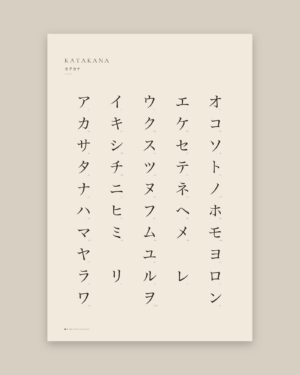
Along with the standard chart (五十音), the voiced sounds (濁音) and the combination sounds (拗音), katakana gets a few pages of its own. シ, ツ, ソ and ン look almost the same, so one page shows how stroke order and direction tell them apart. Another covers the long-vowel mark ー and the small ッ. A reference page at the back lists the extra sounds katakana uses for other languages, like ファ and ヴァ. The last page is the full chart. If you’re learning hiragana too, it has its own book that works the same way.
This is a printed book, made to order when you buy it. It’s 48 pages at 5.5 × 8.5 in (14 × 21.6 cm). It also comes with a printable PDF of the practice pages, in Letter and A4, so you can print fresh sheets once the book fills up.
Reviews
There are no reviews yet.