


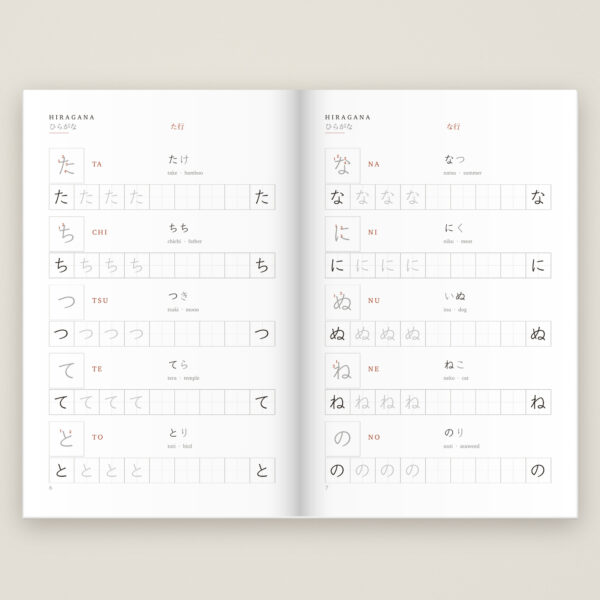
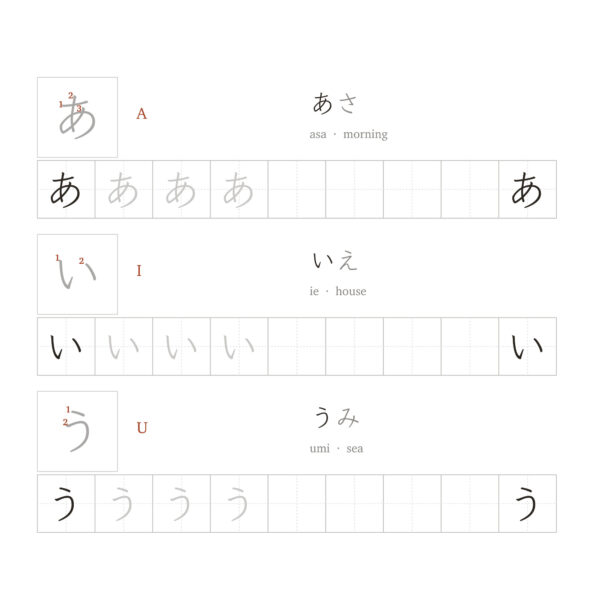
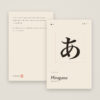
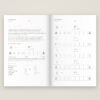
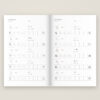

Every character gets its own row. It starts with a large model, with small red numbers showing where each stroke begins and which one comes first. Then you trace three gray copies, write four on your own, and check them against the model at the end of the row. Each character also comes with a short everyday word that uses it, like あさ (asa, morning), so you see it in a real word from the start.
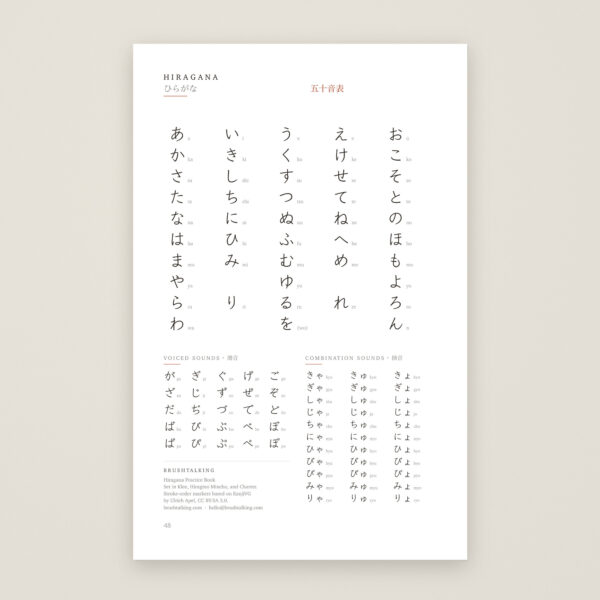
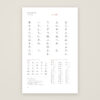
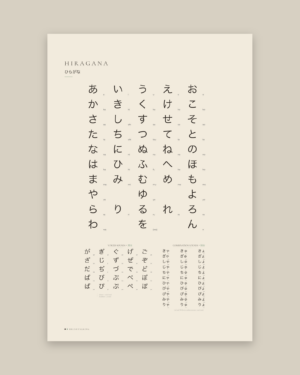
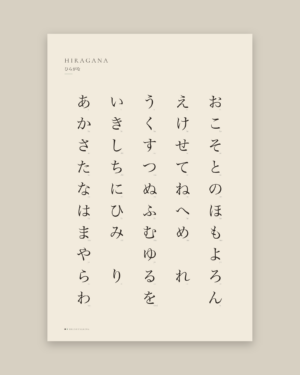
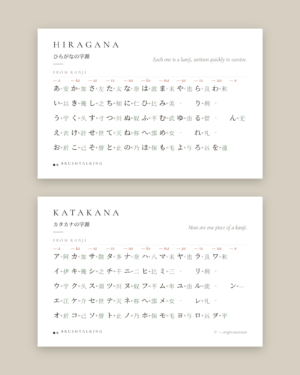
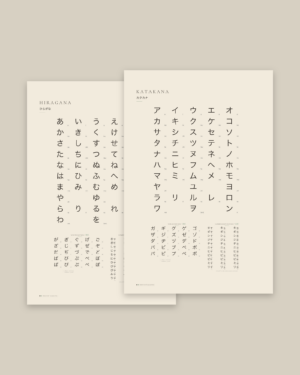
The book follows the standard chart (五十音) five sounds at a time, then moves on to the voiced sounds (濁音) and the combination sounds (拗音). There are review pages after the basic rows, free-practice grids throughout, and the full chart on the last page for reference. Romanization is there when it helps, but try to read the character first. Katakana has its own book that works the same way.
This is a printed book, made to order when you buy it. It’s 48 pages at 5.5 × 8.5 in (14 × 21.6 cm). It also comes with a printable PDF of the practice pages, in Letter and A4, so you can print fresh sheets once the book fills up.
Reviews
There are no reviews yet.