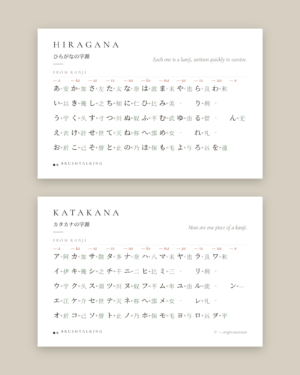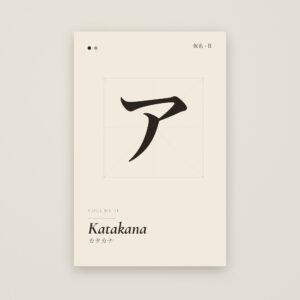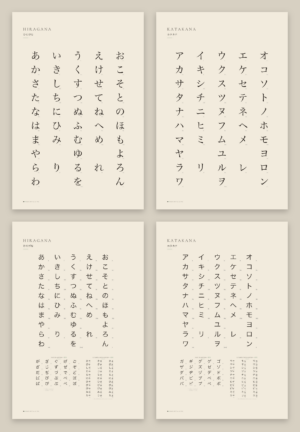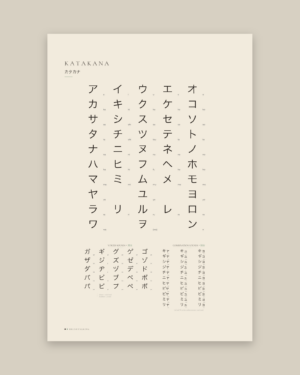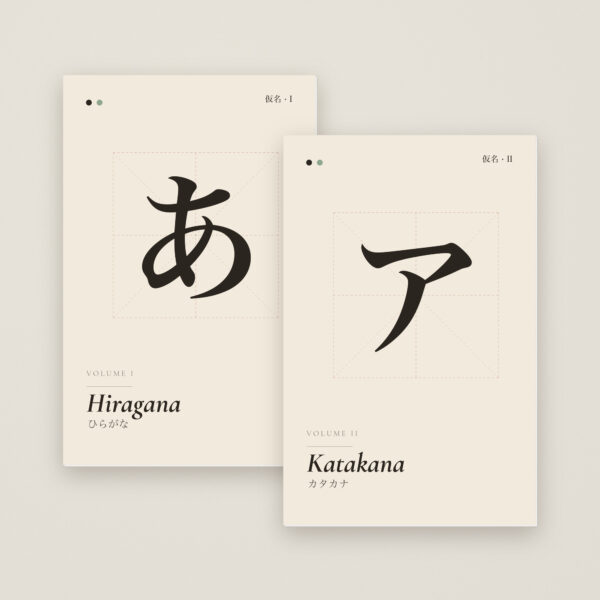


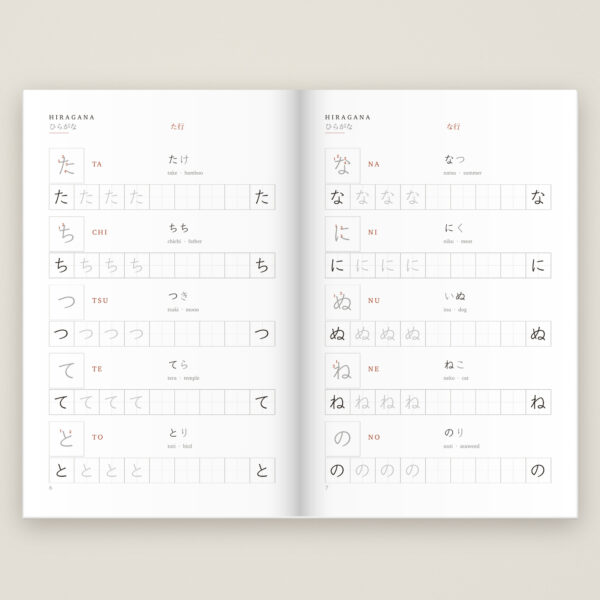
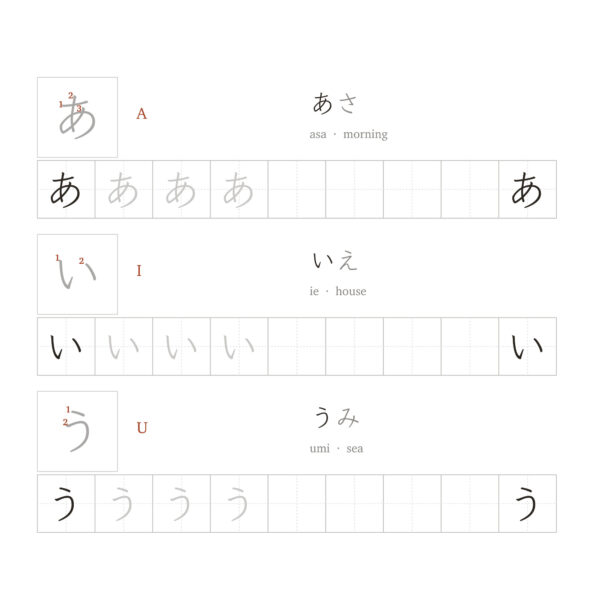
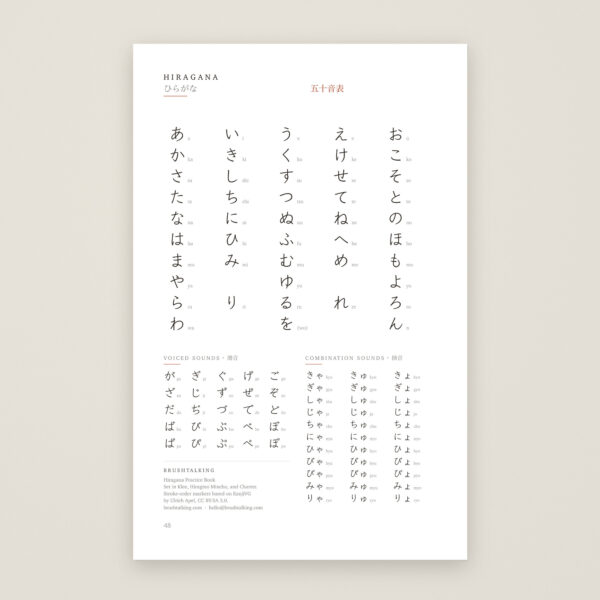
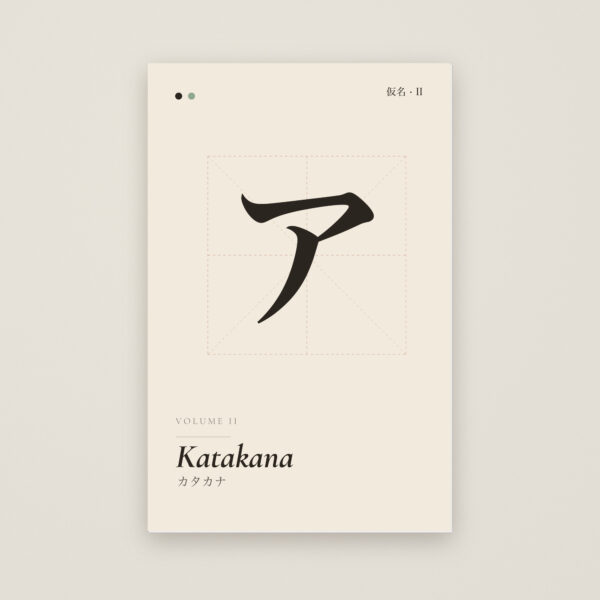
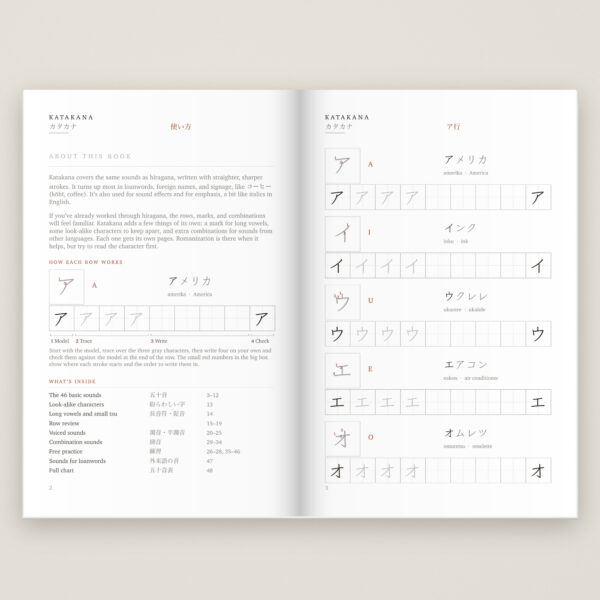

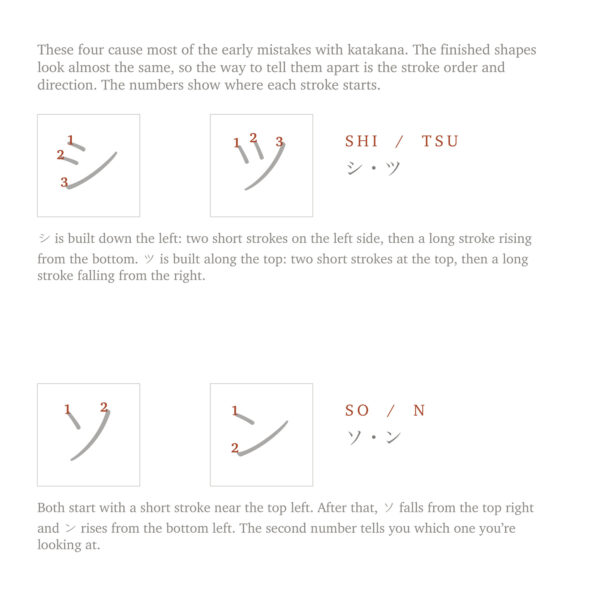

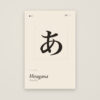
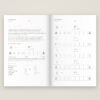
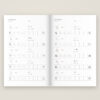

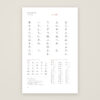
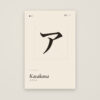
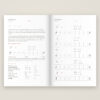
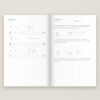
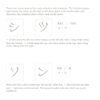
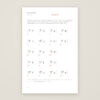
Both kana practice books in one order: hiragana, where most people start with Japanese, and katakana, the script used for loanwords and foreign names. They work the same way, so once you’ve done a row in one, you know how the other works. Each character starts with its stroke order, then you trace it and write it on your own. The voiced sounds and combination sounds follow the 46 basic characters. The katakana book adds pages on the look-alike characters, long vowels and small tsu, plus the extra sounds katakana uses for other languages.
It’s $2 less than the two bought separately.
These are two printed books, made to order when you buy them. Each is 48 pages at 5.5 × 8.5 in (14 × 21.6 cm). They also come with printable PDFs of the practice pages from both books, in Letter and A4, so you can print fresh sheets once the books fill up.